Walking your dog should be one of the most enjoyable parts of the day. It's a chance to exercise, explore the neighbourhood and spend quality time together.
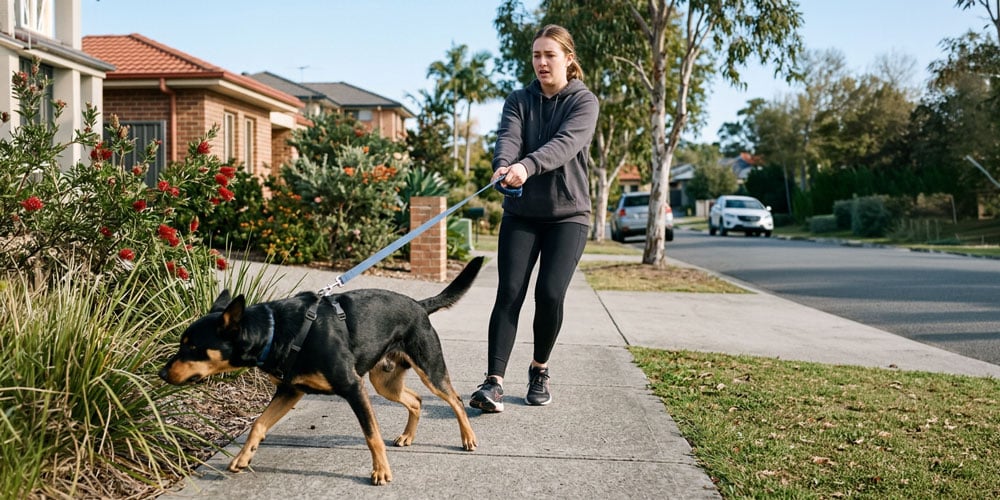
But if every walk feels like you're being dragged down the street, constantly stopping or wrestling with the lead, you're certainly not alone. Lead pulling is one of the most common frustrations for dog owners, and thankfully, it's also one of the most manageable.
Understanding why your dog pulls is the first step towards making your walks calmer and more enjoyable.
Why Do Dogs Pull on the Lead?
Dogs aren't trying to be naughty or dominant. Most pull simply because walking faster gets them where they want to go.
Dogs experience the world through their nose. Every tree, letterbox and patch of grass contains exciting scents, so from their perspective, slowing down isn't very appealing.
If pulling has successfully got them closer to something exciting in the past, they've unknowingly learnt that pulling works.
Common Reasons Dogs Pull
- They're excited to start the walk.
- They've never been taught loose lead walking.
- They're full of energy.
- They're chasing interesting smells, people or other dogs.
- The walk itself accidentally rewards pulling.
Is Pulling Harmful?
Occasional excitement isn't usually a problem, but constant pulling can affect both you and your dog.
For owners, it can make walks tiring, frustrating and even increase the risk of falls.
For dogs, repeated pressure around the neck may contribute to discomfort, particularly in smaller breeds or dogs with existing neck or airway conditions.
If your dog regularly coughs, gags or struggles while wearing a collar on walks, speak with your veterinarian about the most suitable walking equipment for them.
Start Before You Leave the House
Many dogs become excited the moment the lead comes out.
Instead of immediately opening the door, wait until your dog is calm before clipping on the lead. If they become overly excited, simply pause and wait for them to settle again.
Teaching calm behaviour before the walk even begins often leads to a calmer walk overall.
Let Them Sniff
Not every walk needs to be a fitness session.
Sniffing is mentally enriching for dogs and can help satisfy their natural curiosity. Allowing your dog time to investigate interesting scents during appropriate moments can actually leave them feeling more fulfilled than simply covering a long distance.
Think of it as your dog's version of reading the morning news.
Reward the Behaviour You Want
Dogs repeat behaviours that are rewarding.
Whenever your dog walks beside you with a loose lead, calmly praise them and reward them with a small treat, gentle encouragement or the opportunity to continue walking.
Consistency is far more important than long training sessions.
Avoid Accidentally Rewarding Pulling
If your dog pulls and you continue walking, they've learnt that pulling gets them where they want to go.
Instead, stop walking when the lead becomes tight. Once your dog returns their attention to you or the lead loosens, continue walking.
This teaches them that a loose lead makes the walk continue.
Choose Equipment That Fits Properly
Comfort matters.
A properly fitted harness or collar can make walks more comfortable, but no piece of equipment replaces positive training.
Avoid equipment that causes pain or fear, and always ensure your dog's walking gear fits correctly without rubbing or restricting movement.
If you're unsure what type of harness or lead is most appropriate for your dog, ask your veterinarian or a qualified dog trainer for advice.
Remember They're Still Learning
Puppies, newly adopted dogs and energetic breeds often need time to develop good walking manners.
Progress doesn't happen overnight, and it's completely normal to have good days and not-so-good days.
Short, positive and consistent practice sessions usually produce better long-term results than expecting perfection immediately.
When Should You Seek Extra Help?
If your dog lunges at people, reacts aggressively towards other dogs, becomes fearful on walks or pulling is becoming difficult to manage safely, working with a qualified positive reinforcement trainer or veterinary behaviour professional can make a significant difference.
Behaviour that suddenly changes or worsens should also be discussed with your veterinarian to rule out any underlying health issues.
Summary
Lead pulling is one of the most common challenges dog owners face, but it's usually a learned behaviour rather than stubbornness. With patience, consistency and positive reinforcement, many dogs can learn to walk more calmly on the lead. Every relaxed walk is another step towards making your daily adventures more enjoyable for both you and your best mate.