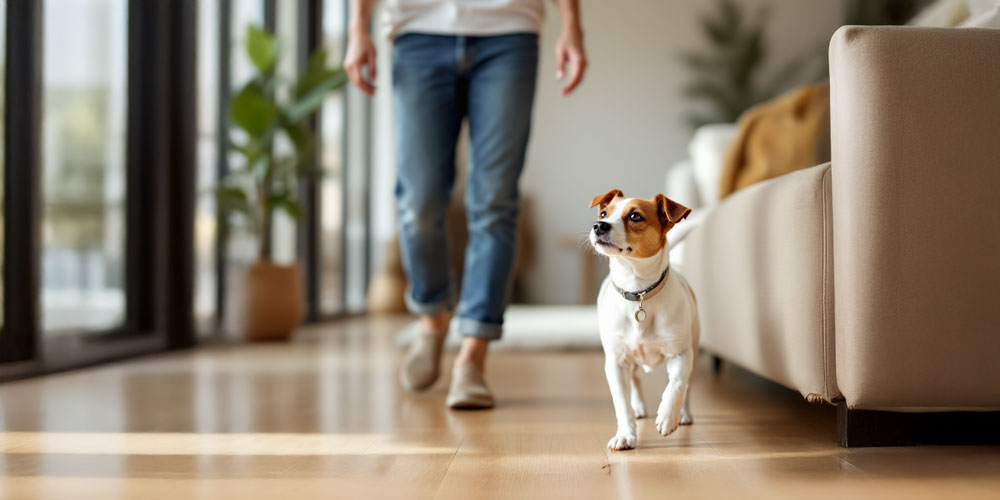
If you cannot go to the bathroom, kitchen, or laundry without a shadow behind you, you are not alone. Many dogs follow their owners from room to room like it is their full-time job.
It might feel dramatic, but in most cases, it is completely normal behaviour. Dogs are social animals, and sticking close to their favourite human makes sense from their point of view.
It is part of their pack instinct
Dogs naturally live in groups. In a household, you are their pack. Following you keeps them connected, informed, and involved.
In the wild, separation from the group could mean danger. Even though your dog lives a comfortable life, those instincts still play a role.
You are the most interesting thing in the house
From your dog’s perspective, you control the fun. You open doors, prepare food, start walks, and give attention. Staying close means they are less likely to miss out.
If your dog has ever followed you and immediately been rewarded with a pat, treat, or interaction, that behaviour quickly becomes reinforced.
Routine and predictability
Dogs love routine. If certain activities happen at specific times, like dinner preparation or evening walks, your dog learns to stay close in anticipation.
Following you can simply be part of their daily pattern.
Attachment and bonding
For many dogs, following is a sign of trust. They feel safe near you and prefer your company.
This is especially common in puppies, rescue dogs, and dogs that have formed strong bonds with their owners.
When following becomes clingy
Most shadow behaviour is harmless. However, if your dog becomes distressed when you leave the house, whines constantly, or cannot settle alone, it may point to separation anxiety.
Signs to watch for include destructive behaviour, excessive barking when alone, pacing, or toileting accidents indoors.
If you notice these behaviours consistently, it is worth speaking with your vet or a qualified trainer for guidance.
Subtle health signals
Sometimes increased clinginess can be linked to discomfort or changes in how your dog is feeling. If following you is paired with reduced appetite, lethargy, or unusual behaviour shifts, it is important to pay attention.
Dogs often seek comfort when something feels off.
How to encourage independence
If you would like your dog to be a little less attached, small adjustments can help.
- Create a comfortable resting space in another room.
- Reward calm, independent behaviour.
- Keep departures and arrivals low-key.
- Provide enrichment toys to build confidence alone.
Independence takes time, but it is something most dogs can learn gradually.
Summary
Most of the time, your dog following you everywhere is a sign of bonding, routine, and natural pack behaviour. It becomes a concern only if it turns into distress or anxiety when separated. Paying attention to changes in behaviour can help you understand whether your dog simply loves your company or needs a little extra support.