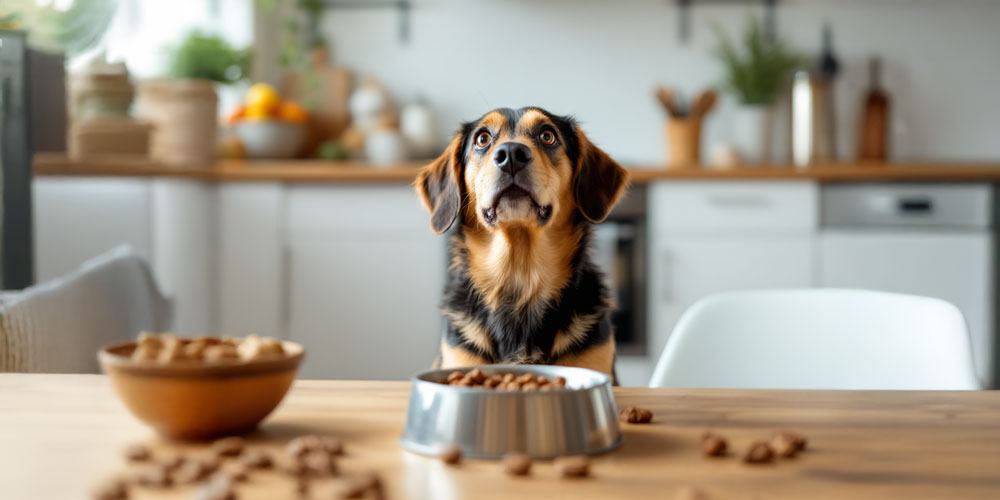
If your dog behaves like they have not eaten in days, even though dinner was five minutes ago, you are not alone. Many dog owners are convinced their pet is constantly hungry.
But in most cases, that dramatic “I have never been fed in my life” behaviour has less to do with hunger and more to do with instinct, routine, and a very clever understanding of humans.
Here are some of the common reasons dogs act starving all the time.
Dogs are naturally opportunistic eaters
In the wild, food is not guaranteed. Dogs evolved from animals that needed to take every opportunity to eat when food was available.
Even though your dog now enjoys regular meals, those instincts have not disappeared. From their perspective, any chance for extra food is worth taking.
They have learned begging works
Dogs are excellent observers. If begging, staring, or hovering around the kitchen has ever resulted in a treat, dropped food, or a small snack, they quickly learn the strategy works.
Once a behaviour gets rewarded, even occasionally, dogs are likely to keep trying it.
Food is exciting
For many dogs, food is the highlight of the day. Meal time triggers excitement, anticipation, and sometimes dramatic behaviour that makes it seem like they are starving.
This is especially common with highly food-motivated breeds.
They might just be bored
Sometimes “hunger” is really boredom. Dogs often associate food with stimulation and attention.
If they are under-stimulated or looking for something to do, hovering around food areas can become a way to spark interaction.
Their feeding routine may be inconsistent
Dogs thrive on routine. When feeding times change frequently, some dogs begin to anticipate food earlier and earlier.
This can make them appear constantly hungry when they are actually responding to an unpredictable schedule.
Portion sizes matter
If a dog is not receiving enough calories for their size, breed, and activity level, genuine hunger can occur.
However, most dogs that seem “starving” are actually being fed the correct amount. Dogs are simply very good at convincing us otherwise.
Fast eaters feel hungry sooner
Dogs that gulp down meals in seconds often do not experience the same feeling of fullness as slower eaters. Eating too quickly can leave them searching for more food shortly after finishing.
Using tools that slow down eating can help dogs feel more satisfied after meals.
When hunger could signal something else
Occasionally, increased appetite can be linked to underlying health issues such as parasites, metabolic conditions, or medication side effects.
If your dog’s appetite suddenly changes, especially alongside weight loss or behaviour changes, it is always worth checking in with your vet.
Helping your dog feel more satisfied
If your dog constantly acts hungry, small changes can help manage their behaviour and improve meal satisfaction.
- Stick to consistent feeding times
- Measure portions carefully
- Use slow feeders or puzzle bowls
- Provide enrichment and activity throughout the day
- Avoid reinforcing begging with extra snacks
In most cases, your dog is not actually starving. They are simply very enthusiastic about food.
Summary
Dogs often act hungry because of instinct, learned behaviour, excitement around food, or boredom. While true hunger can occur, most dogs that seem starving are responding to routine, opportunity, and food motivation. Creating consistent feeding habits and providing enrichment can help keep begging behaviour under control.